Case Study
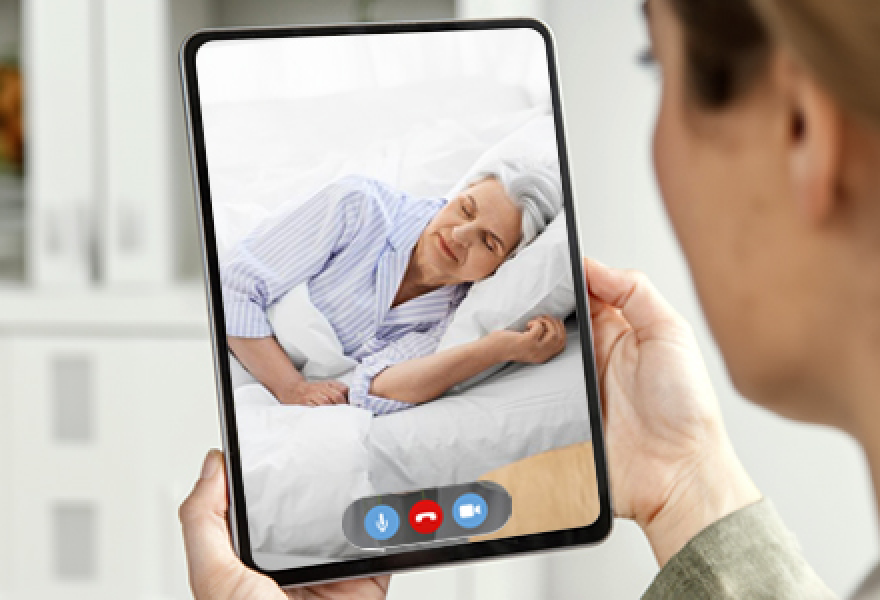




A leading healthcare provider approached SpringCT to develop a non-intrusive, cost-effective system for detecting seizures during nighttime when patients are sleeping in bed . Traditional seizure detection systems rely on EEG (Electroencephalography) devices, which are often intrusive, expensive, and challenging to deploy for continuous monitoring outside of clinical settings.
The goal was to leverage computer vision and machine learning to detect seizures based on physical movements captured in real-time by a video camera. SpringCT's project aimed to deliver an innovative and reliable solution using advanced pose detection and motion analysis technologies.
Product Features
The seizure detection system includes the following key
features:
Real-Time Video Stream Processing
Continuous analysis of video streams captured via a
mobile or fixed camera.
Motion Analysis and Alert Generation
Identifies rapid, jerky movements indicative of
seizures and triggers real-time alerts for caregivers.
Low-Light Optimization
Enhances the system's ability to process video
effectively even in low-light conditions, such as
during nighttime monitoring.
Non-Intrusive Monitoring
Eliminates the need for wearable devices, providing a
seamless and comfortable monitoring solution for
patients.
Technologies Used
- MediaPipe Holistic: Extracts comprehensive pose landmarks, capturing 33 key points for detailed motion analysis.
- OpenCV (Android): Captures and preprocesses camera frames for seamless integration with pose detection models.
- Android Kotlin: Powers an intuitive and responsive user interface for real-time monitoring and alerting.
Key Technical Achievements
Minimizing False Positives
Detecting seizures based solely on body movements
posed a significant challenge, as rapid or jerky
motions (e.g., tossing, turning, or stretching) could
mimic seizure-like patterns. Advanced motion
classification techniques were implemented to address
this issue.
Pose Detection in Occluded Scenarios
Since patients often sleep in positions that obscure
body parts, ensuring accurate pose detection despite
occlusions was a critical hurdle.
Real-Time Processing Constraints
Maintaining low latency while analyzing video streams
in real-time required optimized algorithms and
efficient hardware utilization.
Variability in Seizure Movements
The system had to account for diverse seizure types,
ranging from subtle tremors to full-body convulsions,
requiring extensive data collection and algorithm
training.
Results
- High Detection Accuracy: The system successfully identified seizures involving rapid and jerky movements, such as body rigidity or falling.
- User-Friendly Deployment: Non-intrusive and easy to install, the solution provided caregivers with timely alerts during critical events.
- Challenges Identified: Some seizures involving subtle movements (e.g., mild tremors or head shaking) remained harder to detect, highlighting areas for further improvement.
- Real-Time Alerting: The solution demonstrated low latency, enabling immediate action during seizure events.
Conclusion
- SpringCT's seizure detection project demonstrates a breakthrough in non-intrusive, real-time monitoring of patients during nighttime.
- By leveraging advanced pose detection and motion analysis, the system offers offline application that can run on Android mobile phone as a cost-effective alternative to traditional EEG-based monitoring.
- This project underscores SpringCT's ability to deliver innovative, life-enhancing healthcare solutions by integrating cutting-edge technologies with a deep understanding of user needs.
